
World Sandwich Atlas - World Sandwich
What Is Banh Mi? Bread, Pickles, Herbs, and Sandwich Structure
A practical guide to banh mi: crisp baguette, savory filling, pate or mayo, pickled vegetables, cucumber, herbs, and chile.
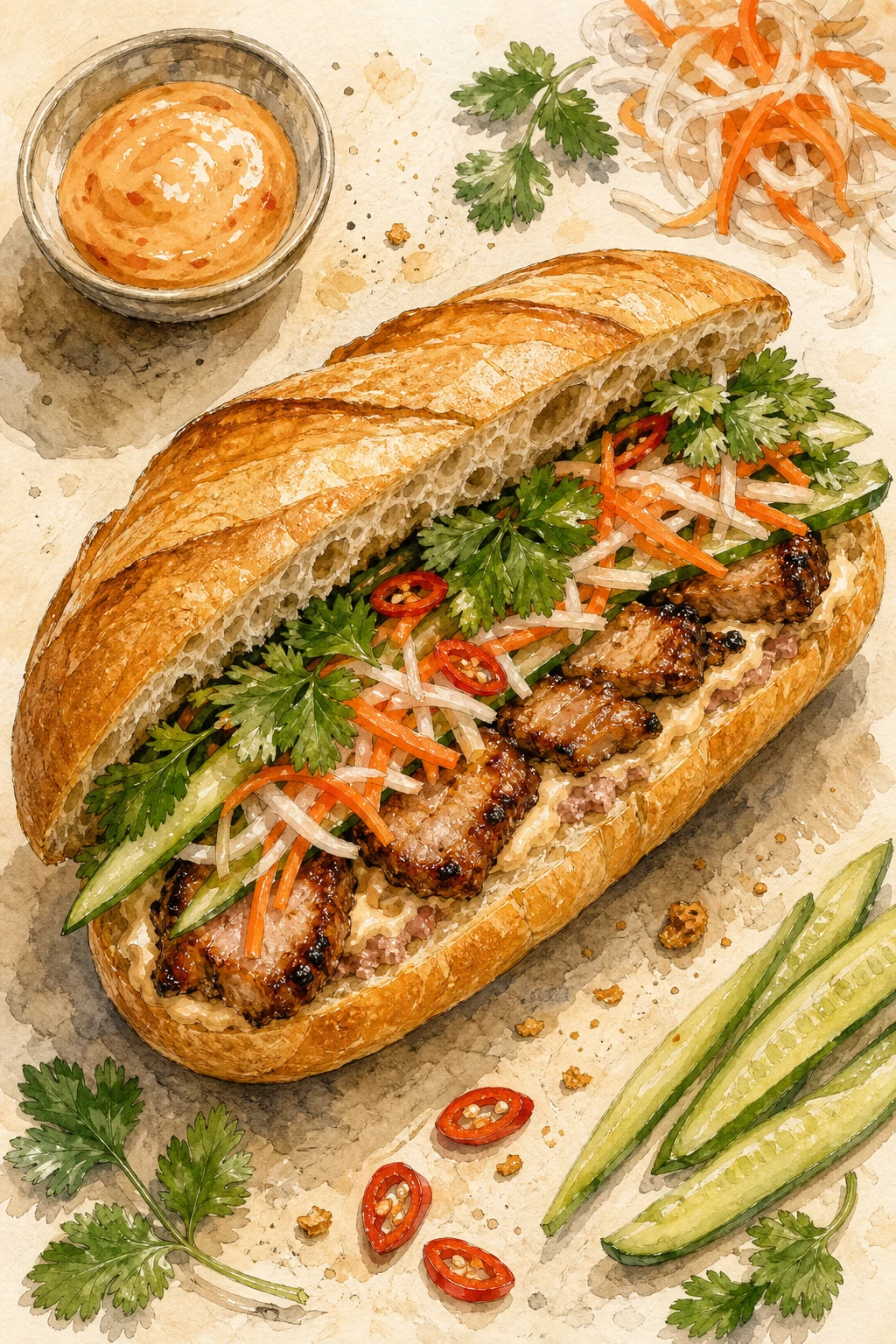
Banh mi is one of the clearest examples of how much a sandwich can do with contrast. The bread is crisp but light, the filling is savory, the pickles are bright, the herbs are fresh, and the sauce is rich enough to make the whole thing feel complete.
A good banh mi is not just a baguette with fillings. It is a study in pressure and release: crust against soft crumb, rich spread against sharp pickles, savory filling against cool cucumber, and chile against fresh herbs.
The sandwich is widely associated with Vietnam, where French-style bread met local ingredients, street-food speed, and a very specific sense of balance. Origin stories can be simplified too easily, so the more useful way to understand banh mi is through its structure.
What Is Banh Mi?
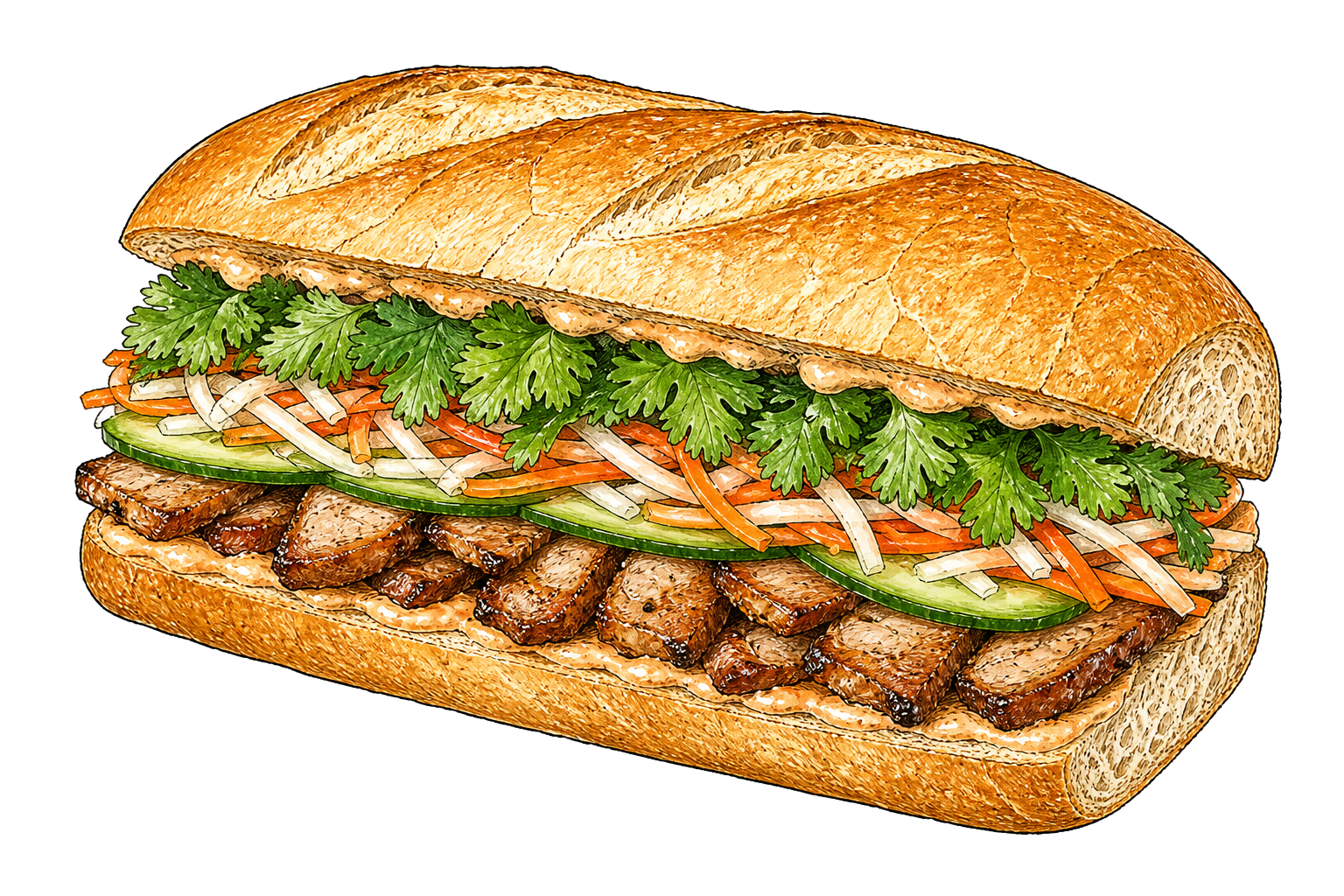
Banh mi is commonly understood in English as a Vietnamese sandwich built on a light, crisp baguette-style roll. Classic versions can include pork, pate, mayonnaise, pickled carrot and daikon, cucumber, cilantro, chile, and seasoning sauce, though fillings vary widely by region, shop, and household.
The name also points back to bread itself. In everyday use outside Vietnam, banh mi usually means the sandwich, but the format depends on the bread as much as the filling. If the roll is too dense, the sandwich loses the crackly, airy bite that makes the pickles and herbs feel so bright.
The Bread: Crisp Shell, Light Interior
Banh mi bread should feel crisp at the crust and open in the crumb. That matters because the sandwich carries several moist elements: mayo or pate, pickled vegetables, cucumber, and sometimes sauced meat. A heavy baguette can make the bite tough, while a soft roll can collapse before the pickles and herbs have a chance to work.
For a home version, warm the bread briefly before assembly. The goal is not a hard toast. You want the cut face just dry enough to hold spread and the crust lively enough to crack without shredding the filling.
The Filling: Savory Center, Not Just Protein
The main filling can be grilled pork, cold cuts, chicken, tofu, egg, meatballs, or another savory anchor. What matters structurally is that it brings depth and salt without covering the fresh layers. Pieces should be bite-size or thin enough that they do not pull out in one strip.
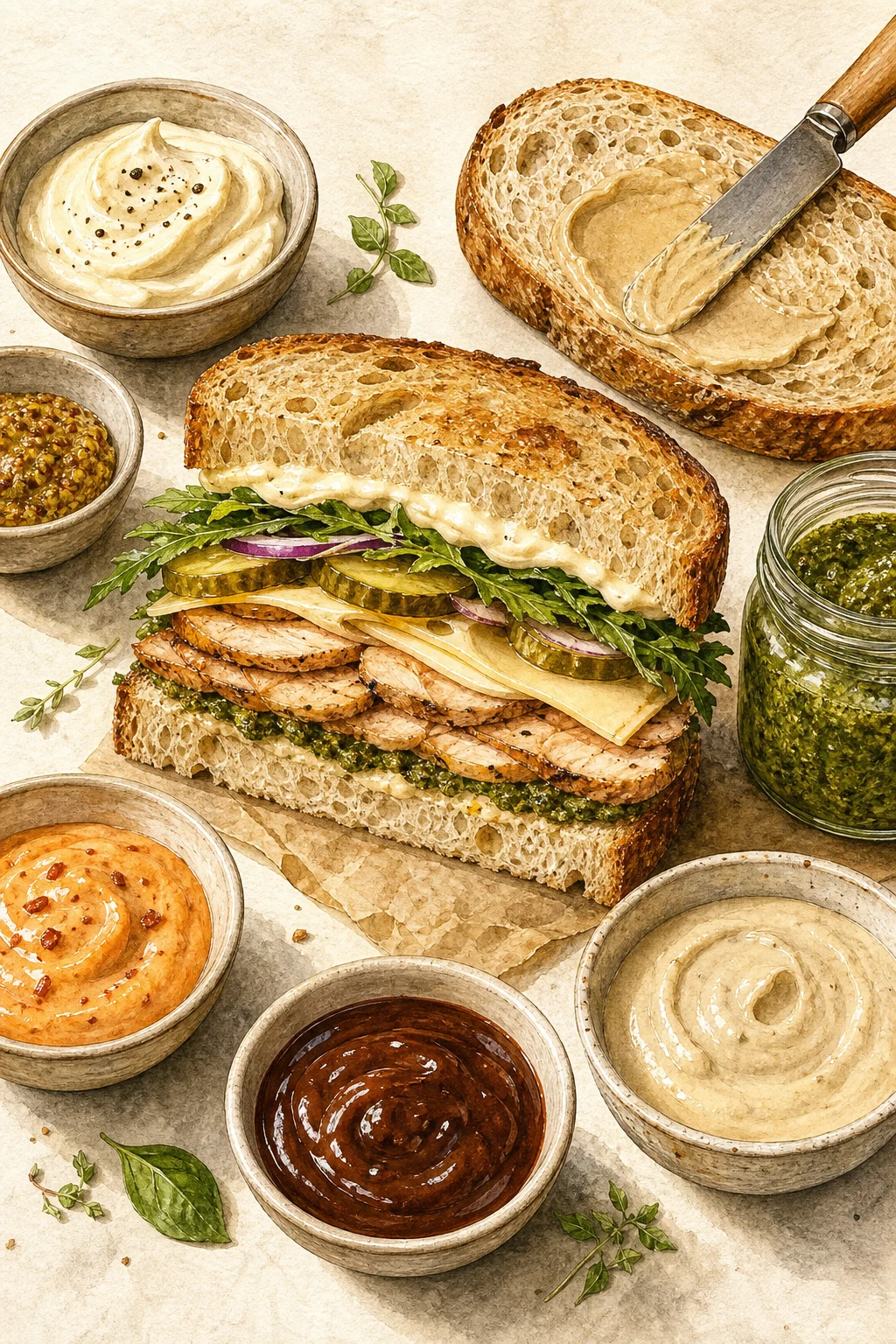
Pate and mayonnaise are common richness builders. Use them like a controlled spread, not a flood. A thin layer seasons the bread, helps catch chile and seasoning sauce, and gives the pickles something rich to cut through.
The Pickles, Herbs, Cucumber, and Chile
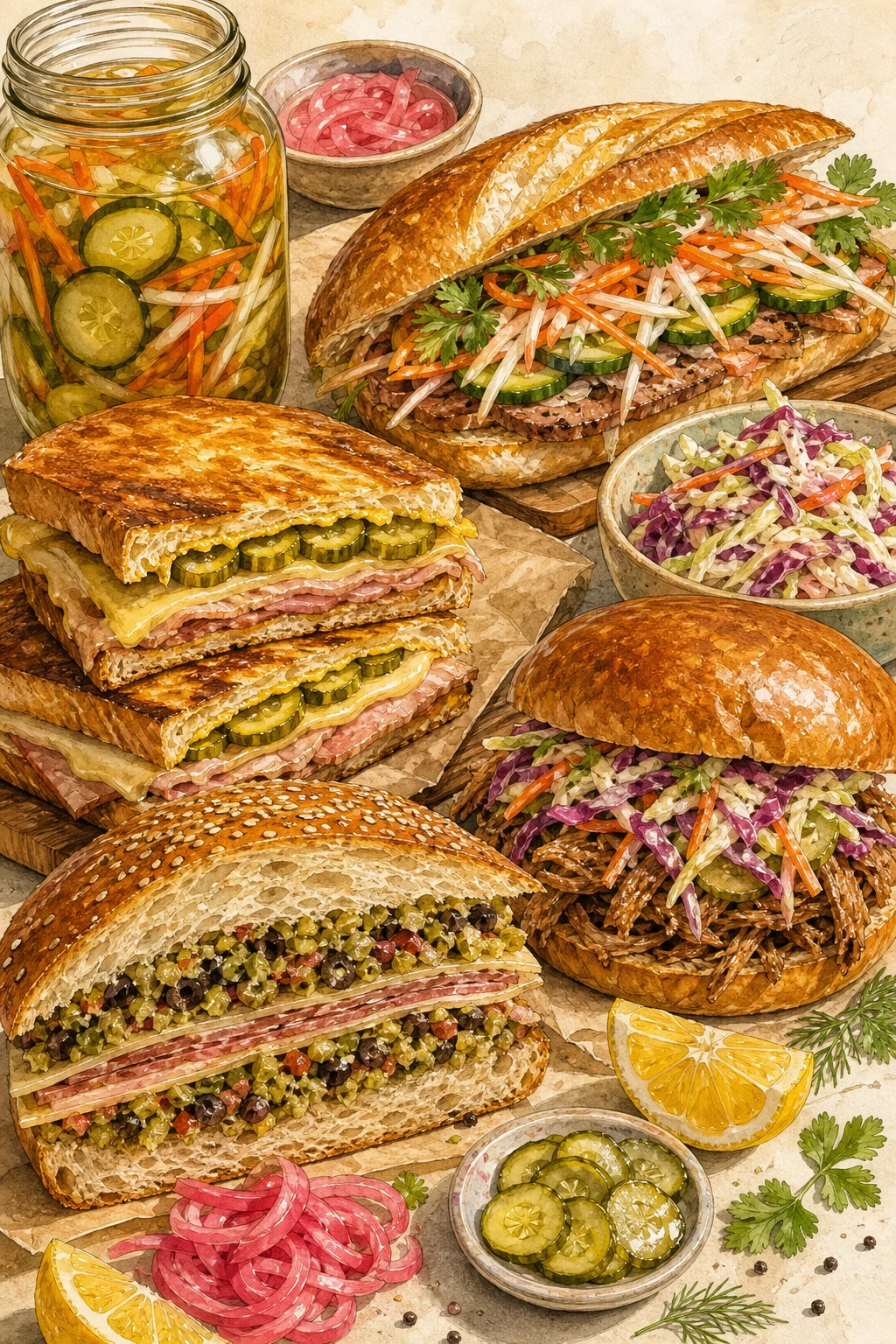
Pickled carrot and daikon are not decoration. They are the bright hinge of the sandwich, bringing crunch, acidity, and a clean finish after rich meat or mayo. Drain them before assembly so they season the sandwich without soaking the crumb.
Cucumber adds cool snap, cilantro adds fragrance, and sliced chile gives direct heat. These layers should be distributed along the whole roll, not piled in the center. Banh mi tastes best when every bite includes at least one crisp, bright, or herbal note.
How to Build a Better Banh Mi at Home
Start with bread that is warm and crisp. Spread mayo, pate, or chili mayo thinly to the edges. Add the savory filling while it is warm or room temperature, then layer drained pickles, cucumber, herbs, and chile so the vegetables sit high and visible.
The biggest home mistake is treating banh mi like a loaded sub. Too much filling makes the bread squeeze shut and hides the herbal snap. Keep the structure lean: bread, rich spread, savory center, drained pickles, cucumber, herbs, chile, and a final light seasoning if needed.
If packing the sandwich, keep the pickles especially well drained and avoid sealing hot fillings inside the bread. Steam softens the crust quickly, and banh mi needs that first crisp bite.
How Banh Mi Connects to Other Sandwiches
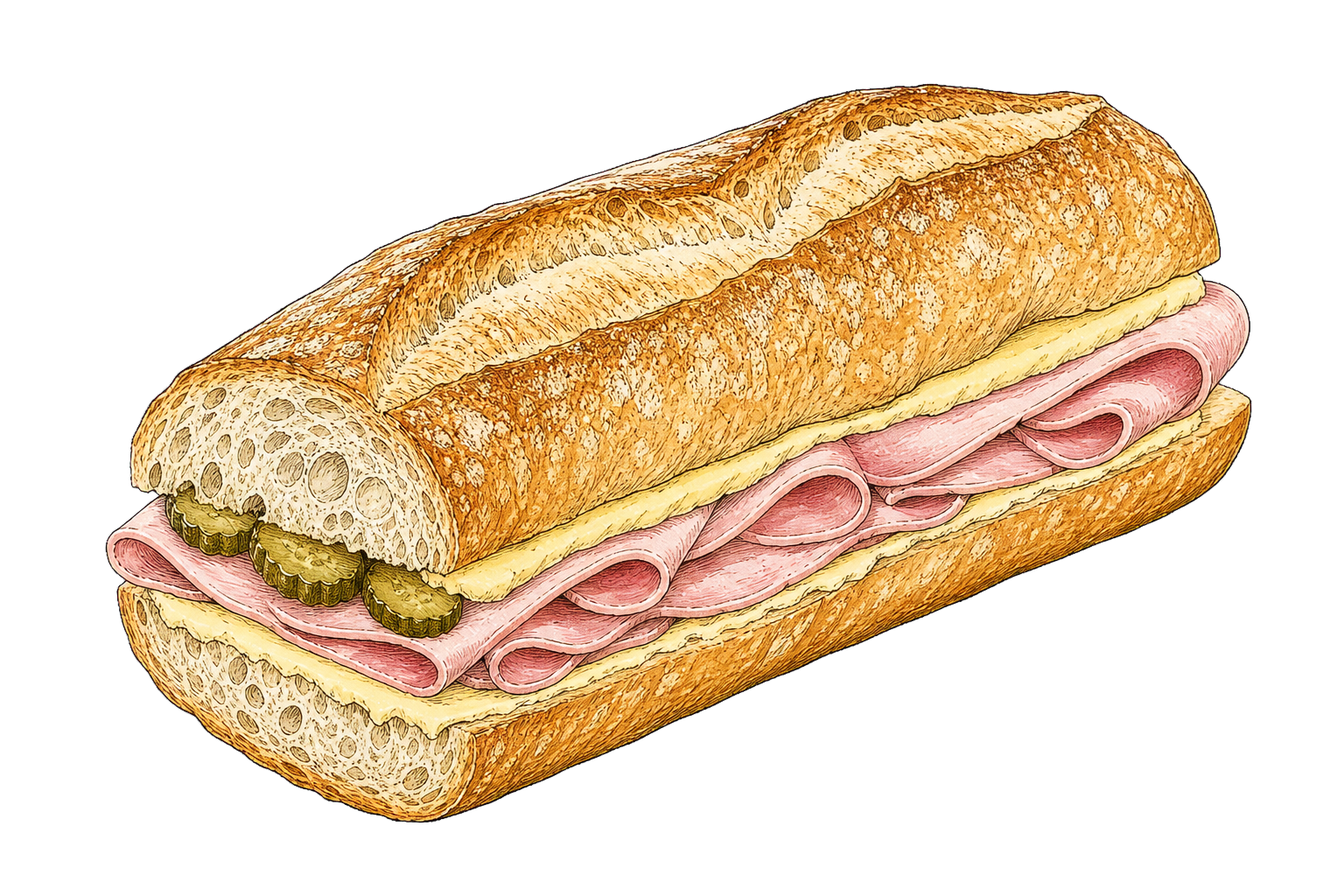
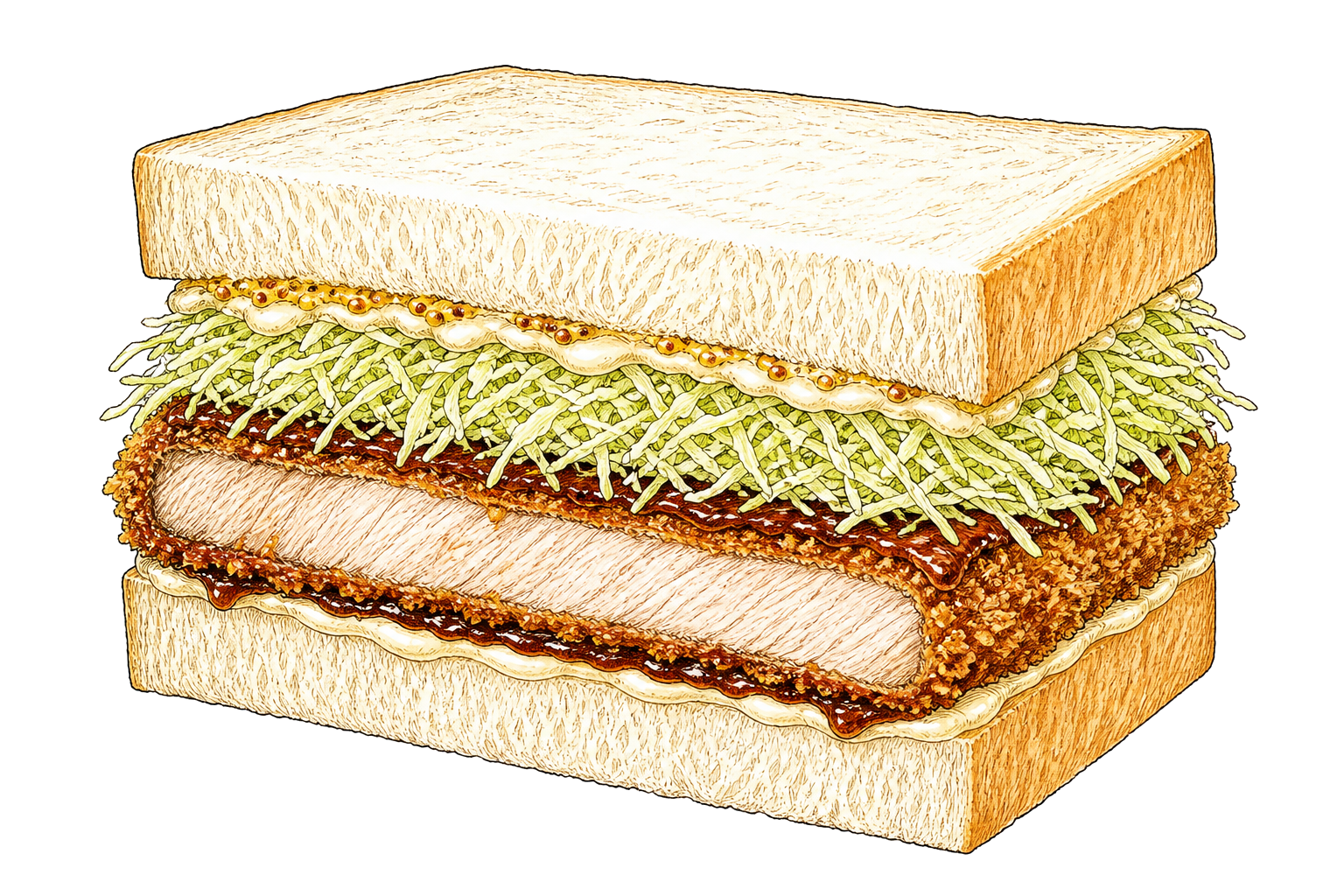
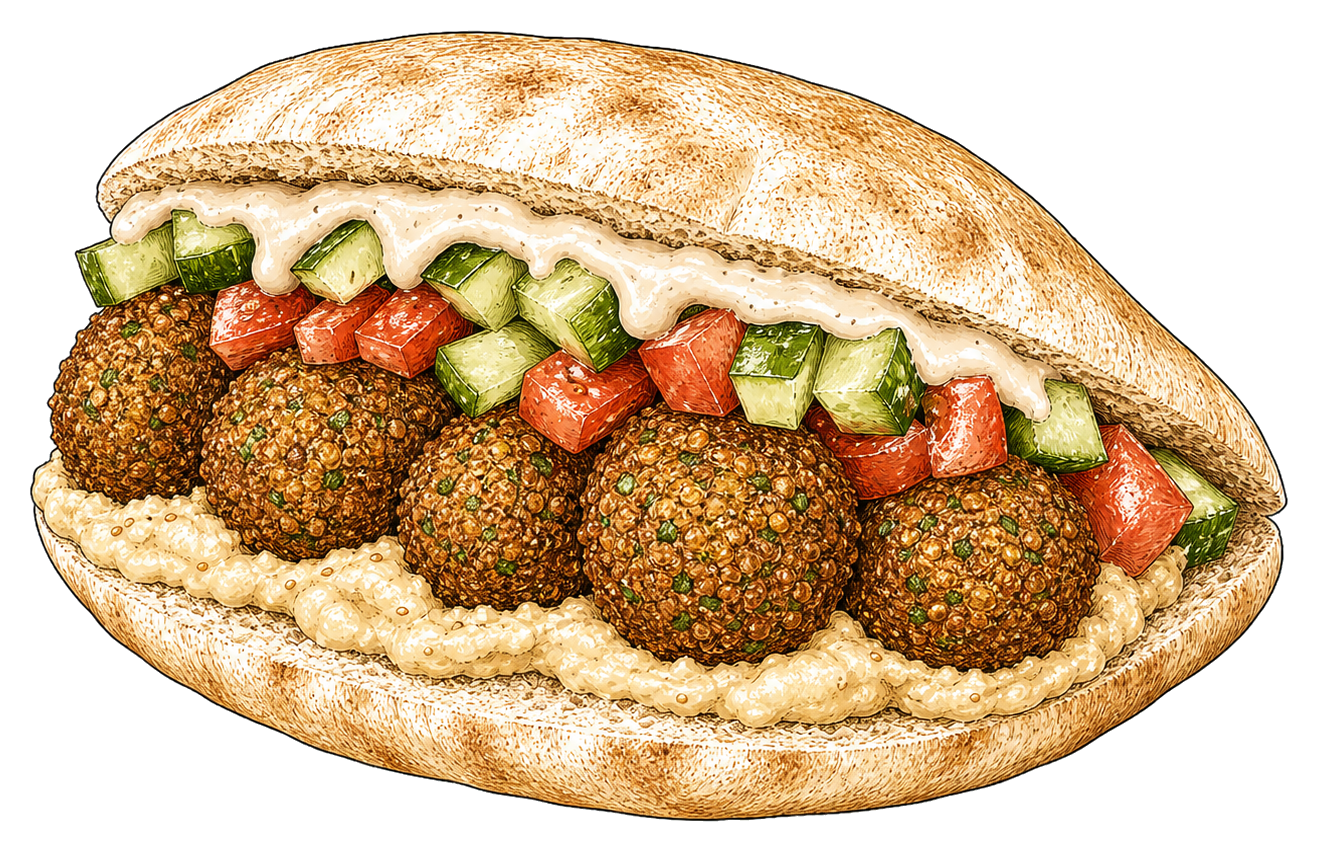
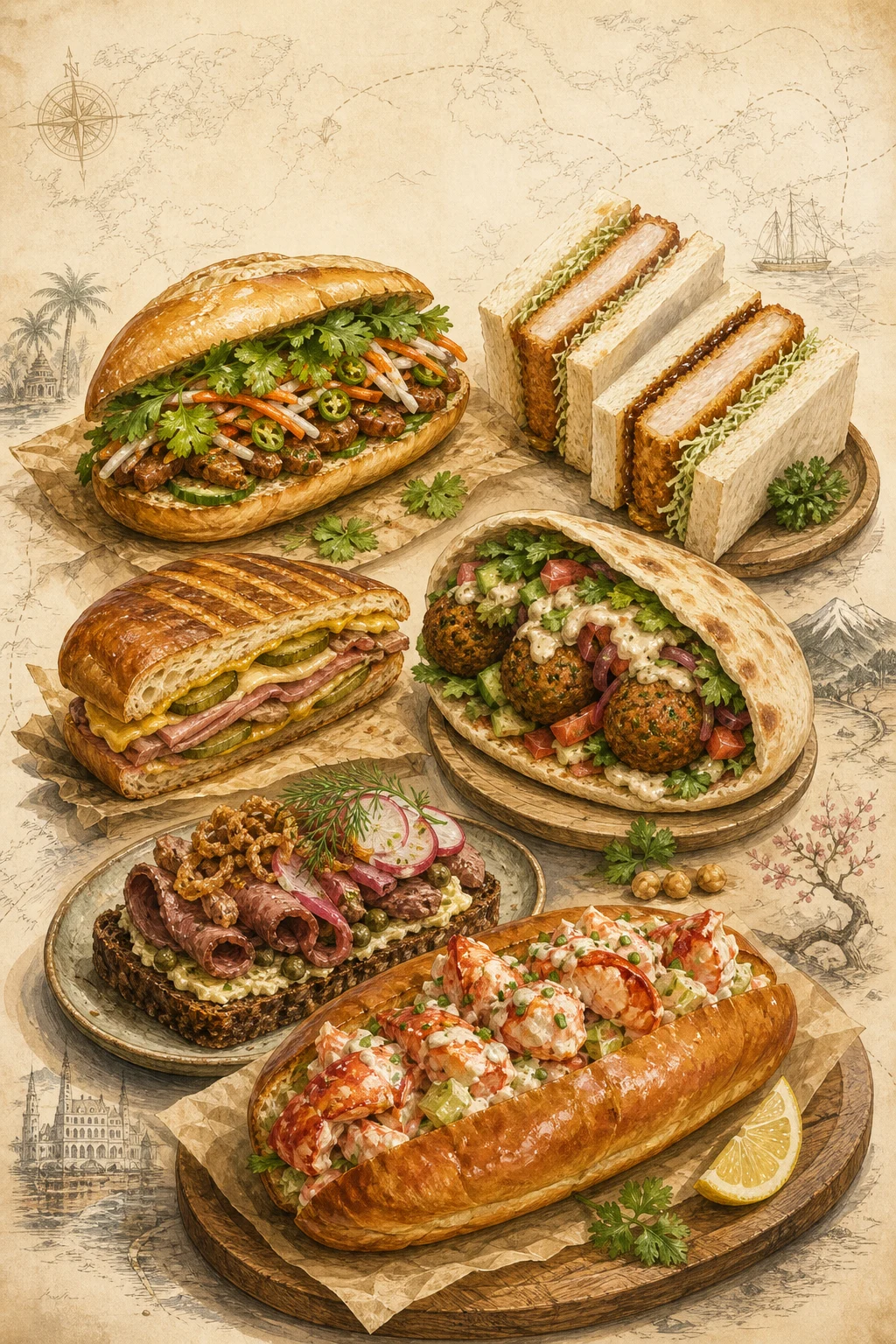
Banh mi sits naturally beside other Sandwich Lovers recipes that depend on contrast. Katsu sando uses soft bread, crisp cutlet, cabbage, and sauce. Falafel pita uses warm bread, fried chickpea texture, pickles, and tahini. Jambon beurre shows the French bread-and-fat logic that helps explain why bread quality matters so much.
The lesson is portable: choose bread with the right bite, place richness close to the bread, keep acidic vegetables drained, and let herbs or fresh greens reset the palate.
Closing
Banh mi is successful because it is precise without feeling fussy. It is crisp, rich, bright, fresh, spicy, and savory in a form you can hold in one hand.
Once you understand that architecture, you can make a better banh mi and read other sandwiches more clearly too: what is the bread doing, where is the moisture controlled, and what ingredient makes the next bite feel fresh again?