
Sandwich Lovers
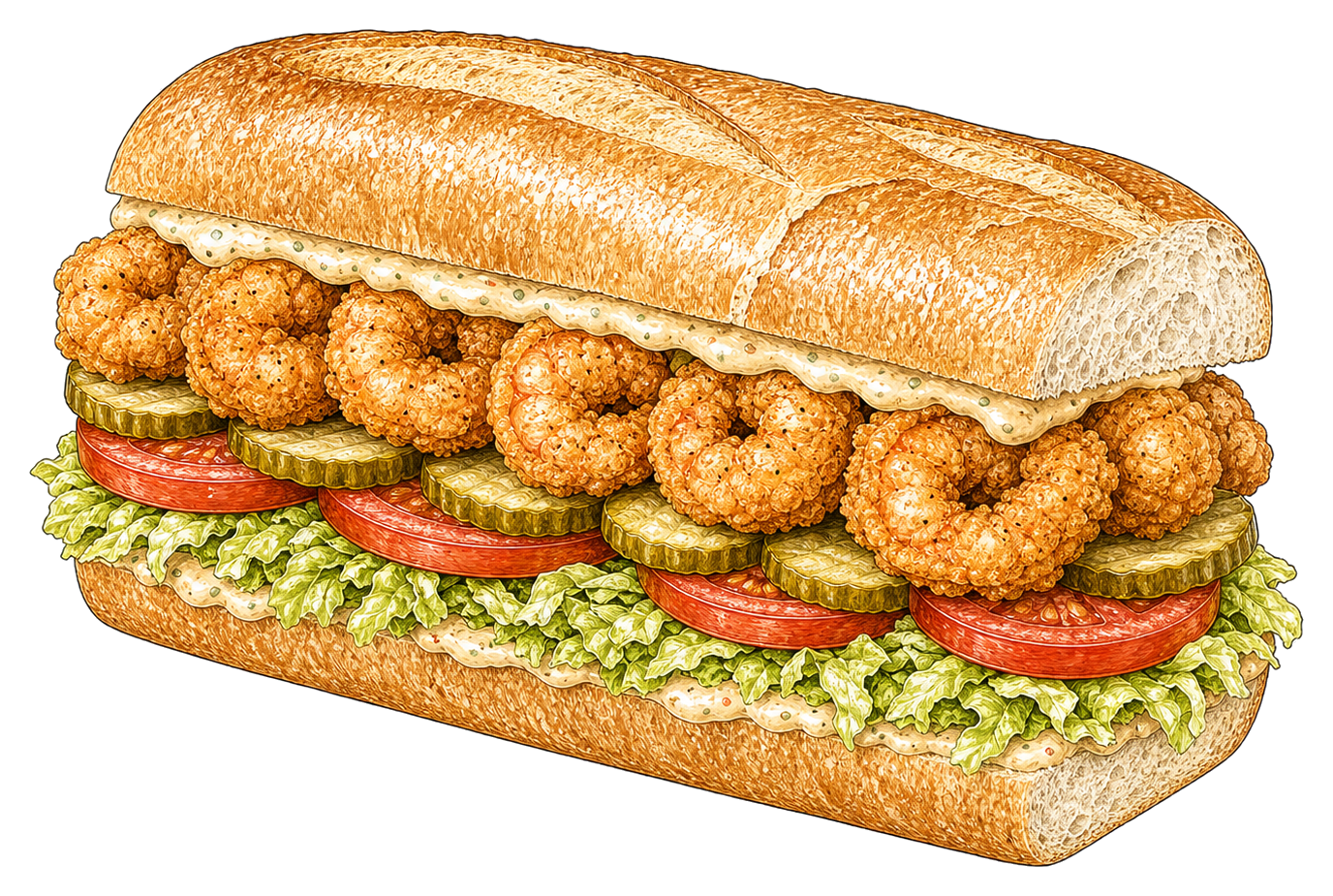
Hand-drawn illustration of a shrimp po' boy with fried shrimp, lettuce, tomato, pickles, and remoulade.
Featured Sandwich

Shrimp Po' Boy Recipe

Created by@sandwichloversOfficial

A New Orleans seafood sandwich with fried shrimp, lettuce, tomato, pickles, and remoulade sauce.

Category

New Orleans ยท Seafood

Bread

French bread roll

LunchSeafoodAmericanMedium

Ingredients

Measured for 2 sandwiches.

Ingredient Note

French bread rolls

French bread rolls gives Shrimp Po' Boy its structure and bite.

Detailed Recipe

Time

30 min

Level

Medium

Servings

2 sandwiches

  1. 1Dip shrimp into beaten egg.
  2. 2Coat shrimp with flour, cornmeal, and Cajun seasoning.
  3. 3Fry until golden and crisp.
  4. 4Spread remoulade sauce on the French bread roll.
  5. 5Add lettuce, tomato, pickles, and fried shrimp.
  6. 6Close the sandwich and serve immediately.

Recipe guide

How to make Shrimp Po' Boy

This Shrimp Po' Boy recipe is built for searchers who want a practical, repeatable sandwich rather than a vague list of fillings. It uses french bread roll with french bread rolls, shrimp, flour and cornmeal, then balances texture, moisture, and seasoning so the finished sandwich eats cleanly from the first bite to the last.

The goal is not only to assemble Shrimp Po' Boy; it is to understand why the bread, filling, sauce, and bright layer work together. Use the notes below to adjust the sandwich for your kitchen while keeping the Sandwich Lovers structure intact.
What it is

Shrimp Po' Boy is a new orleans / seafood sandwich built around french bread roll. The important idea is proportion: the bread should frame the filling, the main ingredient should be easy to bite through, and the final layer should add either crunch, acidity, or richness.

Because this version is measured for 2 sandwiches, it is easy to scale. Keep the same ratios when doubling the recipe so the sandwich still feels balanced instead of overloaded.

Why it works

Shrimp gives the sandwich its center, while Shredded lettuce keeps the bite from feeling flat. French bread roll adds the structure, which matters as much as flavor because a good sandwich has to survive being picked up, sliced, and eaten.

Oil for frying should be spread all the way to the edges. That creates flavor in every bite and can also protect the bread from loose moisture.

Ingredient notes

Choose bread that is fresh but sturdy. If the bread feels too soft, toast only the cut side or inner face so the exterior stays tender while the inside gets a protective layer.

Cut or fold the main filling into bite-friendly pieces. Sandwiches fail when one ingredient pulls out in a single strip, even if the flavor is right.

Step-by-step technique

Prepare the wettest ingredients first, then drain or blot them before they touch the bread. Next, cook, warm, or toast each component just long enough to improve texture without making the bread heavy. Build from the sturdiest layer upward and keep slippery ingredients away from the outer edge.

After assembly, press the sandwich gently for a few seconds. That small pause helps the layers settle without crushing the bread or squeezing out the sauce.

Bread choice

French bread roll is the default because it matches the filling weight. If you change the bread, match texture first: soft fillings need tender bread, saucy fillings need a sturdier roll, and crisp fillings need bread that yields before the filling pulls free.

For a cleaner cross-section, slice with a sharp serrated knife and let hot fillings rest for a minute before cutting. The sandwich will look better and eat with less collapse.

Substitutions

  • Swap french bread roll for a bread with similar sturdiness if needed.
  • Use a comparable amount of shrimp or another filling with the same bite size.
  • Replace oil for frying with a sauce that has the same thickness.
  • Keep a bright ingredient such as shredded lettuce so the sandwich does not taste heavy.

Make-ahead and storage

  • Prep fillings and sauces ahead, but keep bread separate until serving.
  • Drain juicy or pickled ingredients before storing so they do not water down the final sandwich.
  • Assemble close to eating time for the best texture; if packing, wrap tightly and keep chilled when appropriate.

Common mistakes

  • Overfilling the center so the first bite pushes ingredients out.
  • Letting wet ingredients sit directly on soft bread without a barrier.
  • Skipping seasoning on the main filling and expecting the sauce to carry the whole sandwich.

Serving ideas

  • Serve with pickles, chips, or a crisp salad for contrast.
  • Cut on a diagonal or through the thickest part so the layers are readable.
  • Pair with iced tea, sparkling water, or a bright citrus drink.
  • Use leftovers as a lunchbox sandwich only if the wet ingredients are packed separately.

Related Journal

Reviews

Rate this recipe

Comments are available for members. Sign up or sign in to post.

No member comments yet. Be the first to leave a review.

You might also like