
Sandwich Foundations - Technique Guide
Best Layer Order for a Better Sandwich
How to stack bread, sauce, cheese, meat, vegetables, pickles, and crisp layers so every bite works.
Layer order is the quiet engineering of a sandwich. It decides where moisture goes, what you taste first, and whether the filling stays inside the bread.
A sandwich can have good ingredients and still eat badly. If the sauce is all in the center, the tomato soaks the bread, the lettuce slides, or the meat pulls free in one piece, the problem is often layer order.
The best order changes by sandwich, but the logic stays the same: protect the bread, distribute flavor, place slippery ingredients where they have support, and keep bright layers visible enough to signal freshness.
Start With the Bread Face
The bread face is the surface that touches the filling. Treat it before anything else. Toast it, butter it, spread it, or line it with cheese or lettuce depending on the sandwich.
Soft sandwiches often need mayonnaise or butter. Hot sandwiches may need melted cheese or a toasted cut side. Deli sandwiches can use mustard, but a very thin watery mustard directly on soft bread can create the same sogginess you were trying to avoid.
The bread face is not only protection. It is flavor placement. A spread that reaches the edges makes the sandwich taste complete.
Put Stable Layers Near the Bread
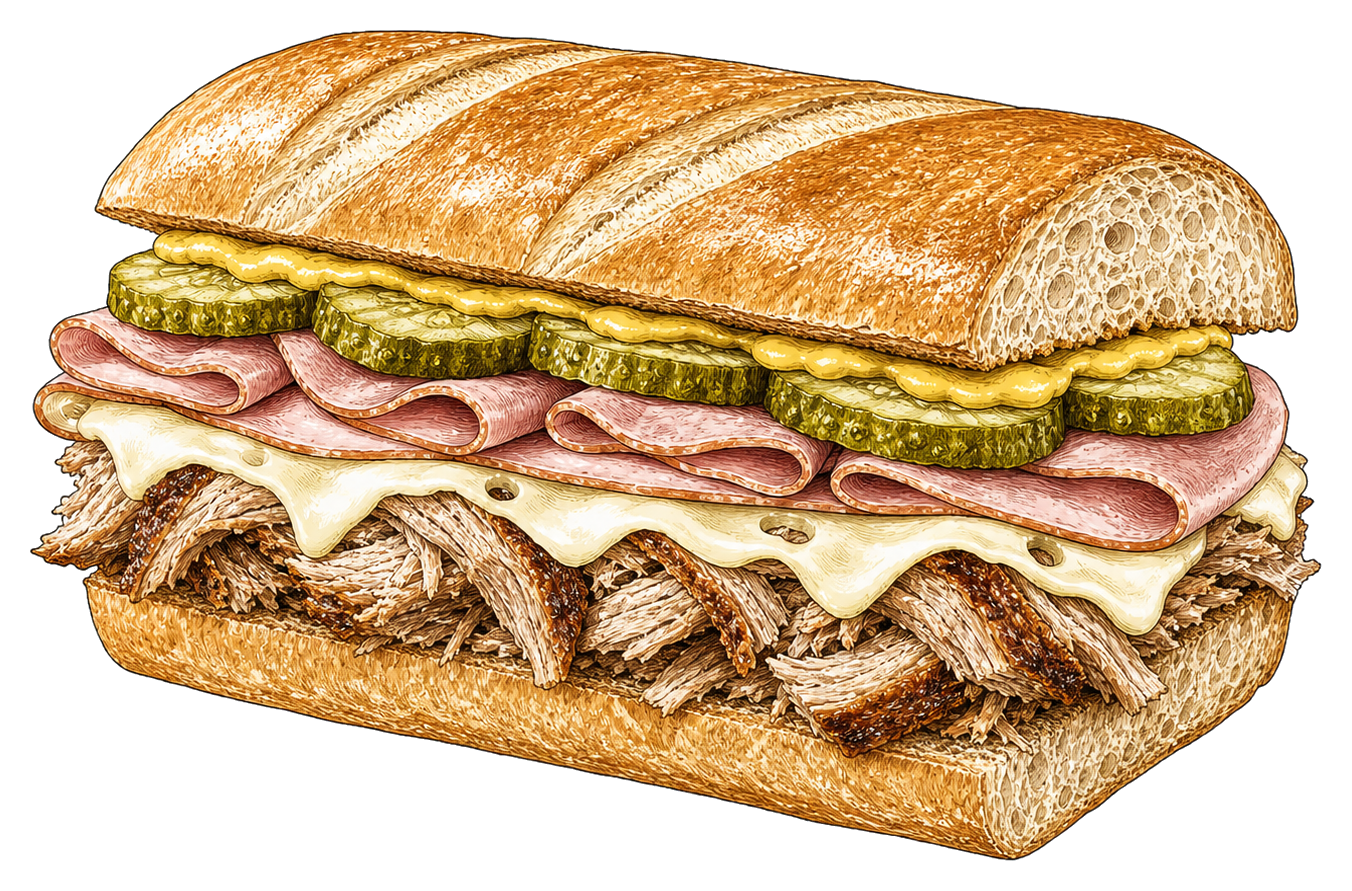
Stable layers are ingredients that do not leak or slide much: cheese, dry lettuce, folded deli meat, fried cutlets, crisp bacon, or a compact patty. They can sit near the bread and help hold the rest of the sandwich in place.
Cheese is especially useful because it can behave like glue in a hot sandwich and like a moisture shield in a cold one. Lettuce can also protect bread, but only when it is dry.
If you are using a slippery filling, put it between stable layers instead of directly against the bread.
Put Juicy Ingredients in the Center
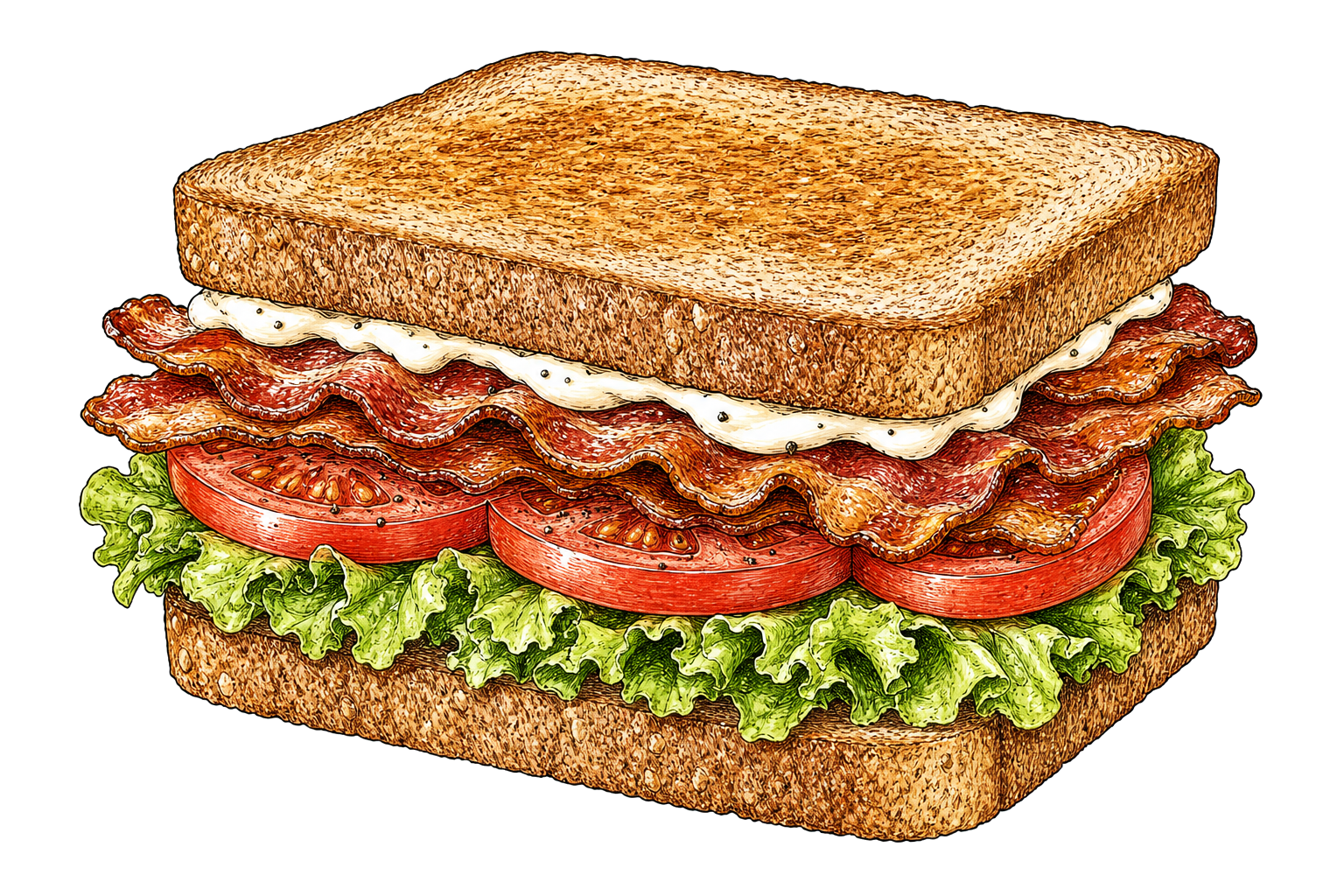
Tomato, pickles, slaw, roasted peppers, sauced meat, and chopped condiments should usually live closer to the center. That way they season the bite without soaking the bread immediately.
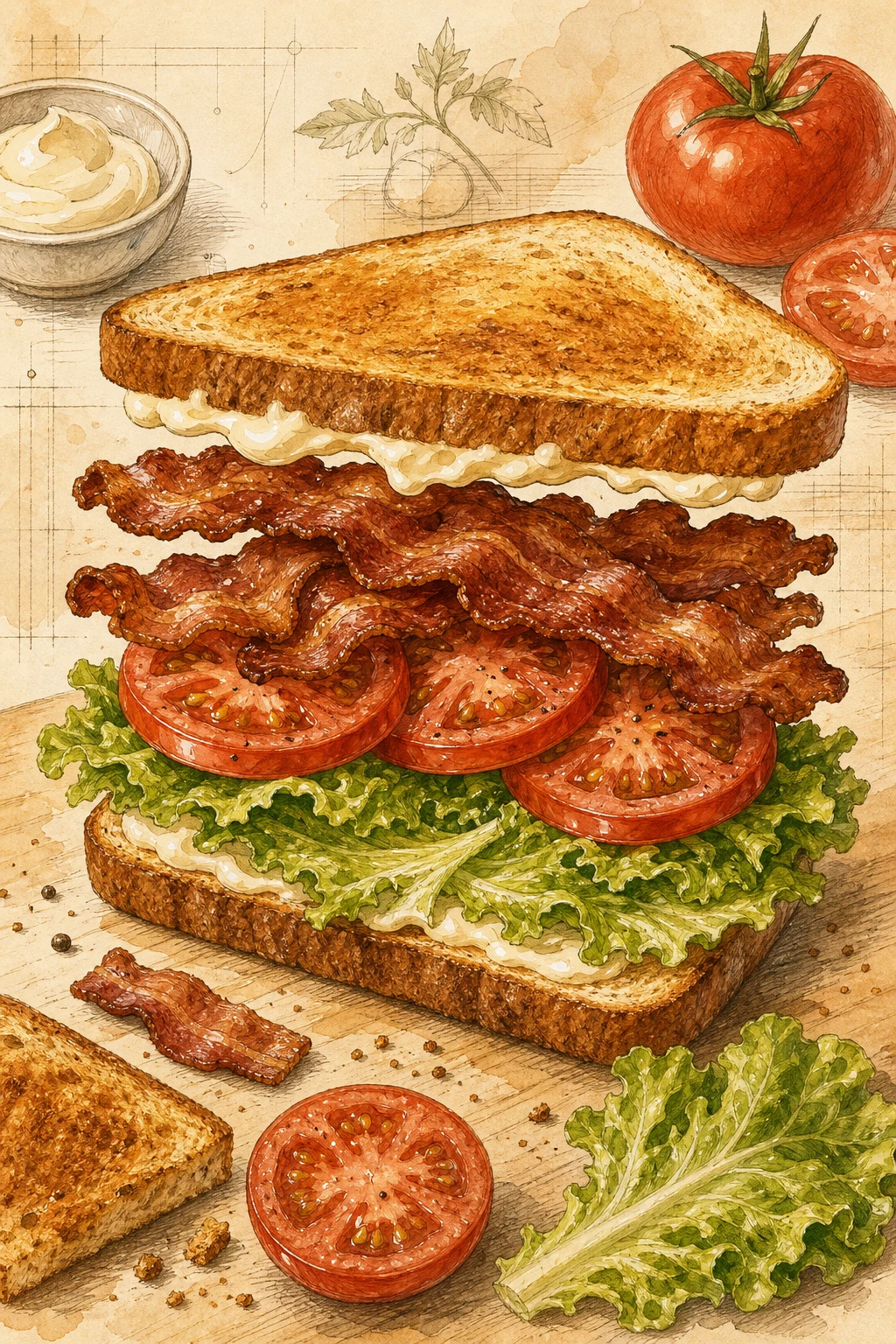
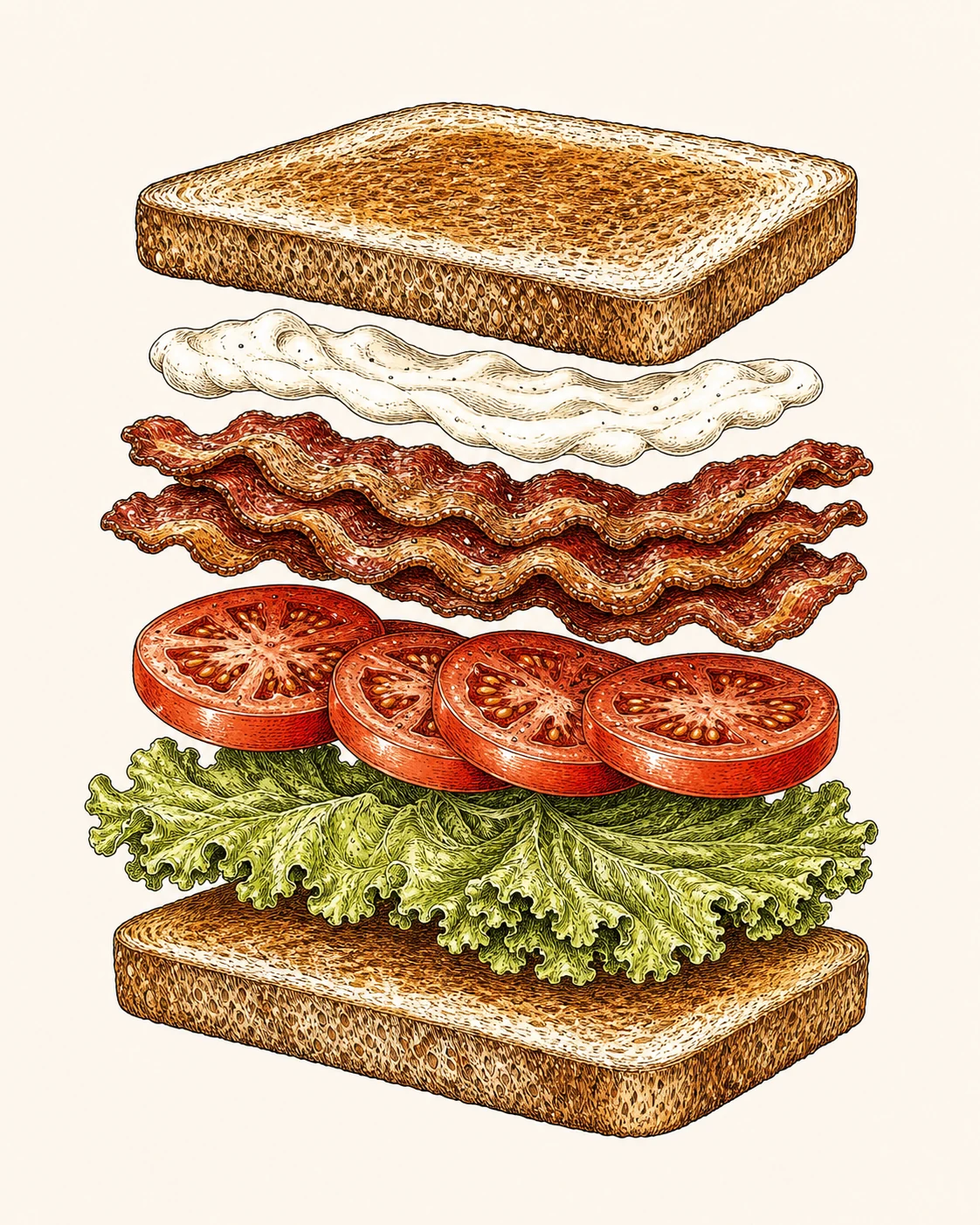
A BLT shows the logic clearly: toast, mayonnaise, dry lettuce, tomato, bacon, mayonnaise, toast. The lettuce buffers the tomato, the bacon stays crisp and visible, and the mayonnaise connects both sides.
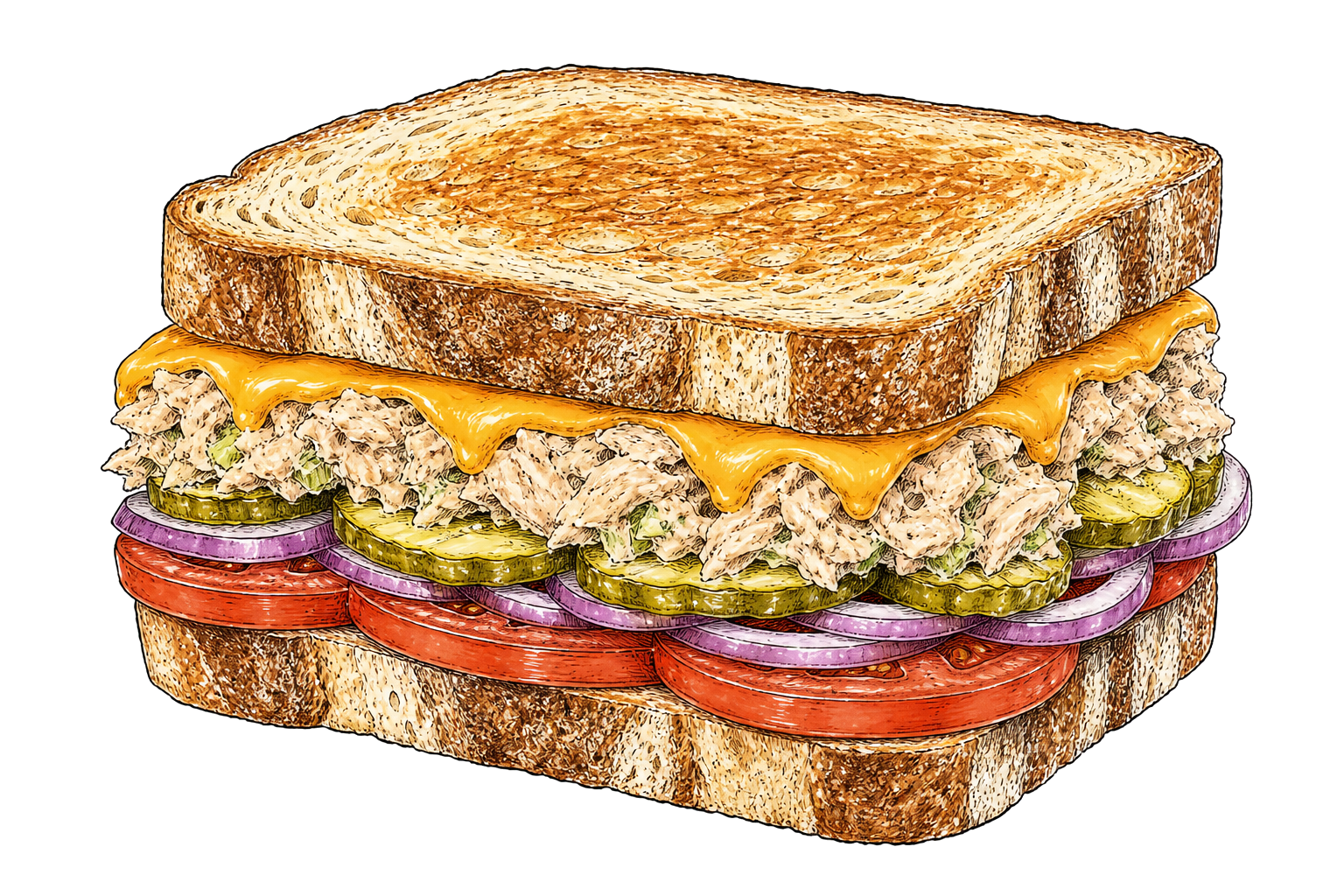
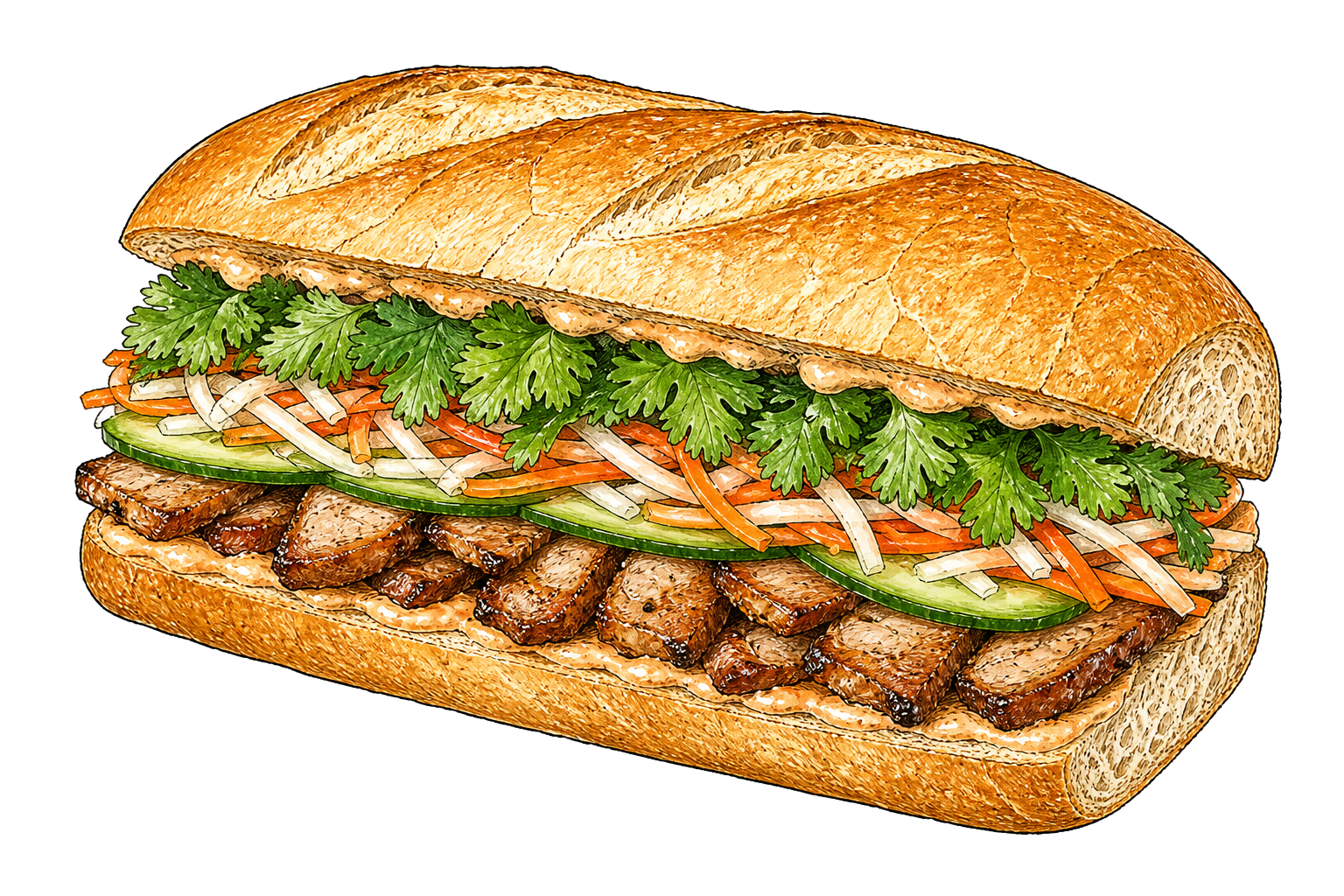
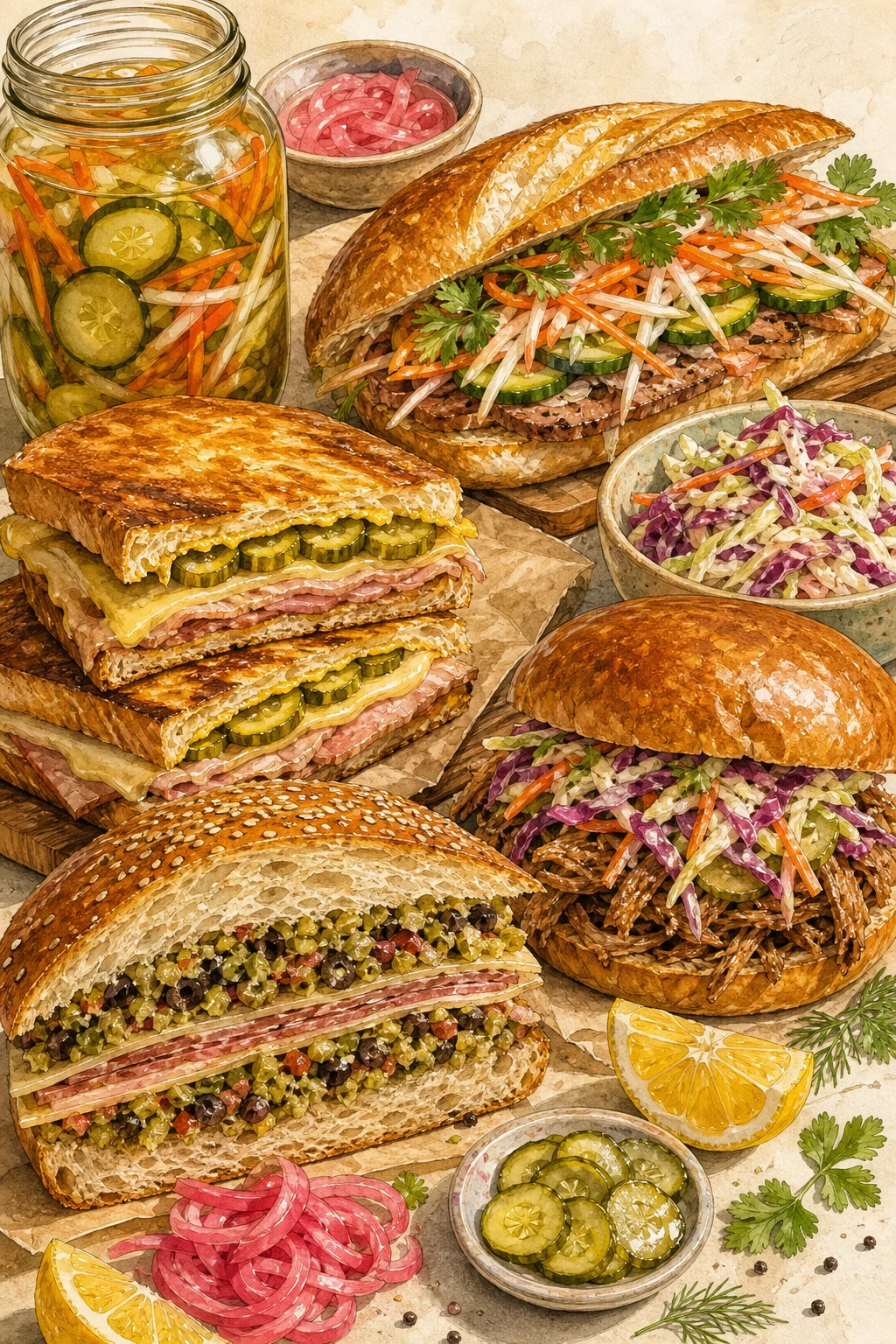
For a tuna melt, cheese can sit near the bread while tuna salad stays in the middle. For a banh mi, pickles and herbs should be distributed widely but not dripping into the baguette.
Think About the First Bite
The first bite should tell the truth about the sandwich. If the front edge only shows bread and lettuce while the filling hides in the back, the sandwich will look and taste less generous than it is.
Let signature ingredients appear near the cut edge: bacon and tomato in a BLT, pickled vegetables in banh mi, cheese in grilled cheese, slaw in pulled pork, olive salad in muffuletta.
This is not just photography. Visible layers help the eater know what flavor is coming next.
Closing
Layer order is a practical habit. Protect the bread, support slippery ingredients, put bright or wet ingredients where they can season without flooding, and make the cut edge readable.
Once the stack has a job for every layer, the same ingredients taste more intentional.